Build your house on Crete
our tips and experiencesOur dream was to have our own house built in Crete. One that met our exact requirements. With a swimming pool and, most importantly, a sea view.
Building your own house (or having it built) can be quite a challenge. Especially in a foreign country with different rules, customs and culture.
We have compiled our steps, experiences and tips for you on this page. Use them to your advantage.
Step-by-step plan
Building a house in Crete
How do you do that
Looking for a greek contractor
How do you find a good contractor
It's crucial to thoroughly research local contractors yourself. Don't just rely on price. Schedule an appointment and talk to them in person. How long have they been in business? Are there many people working there? What have they built? Do you know how they operate? What do their clients say? Can you see the houses they have built with your own eyes?
Draft a contract for construction
We signed a written construction offer with our contractor. This document details the exact cost of building the house, the payment schedule, the materials he will use and the exact details of each room, including what's included and what's not. It also specifies when the contractor should have the house completed. Our contractor delivered our house within 12 months (excluding delivery points). Of course, some issues did arise during construction, but our contractor resolved everything efficiently. To this day, we are very satisfied and are still in contact with our contractor.
Should you include a penalty clause or not
It is quite common to agree on a deadline for construction. If the contractor doesn't deliver on time, they have to pay a penalty for each day/week they are late. We deliberately chose not to include a penalty clause in the contract and opted for more flexibility to allow for design adjustments during construction. For example, the contract stipulates that you can choose tiles for a maximum of €40 per square meter. These tiles are often in stock. If you choose a more expensive tile, you'll pay a surcharge and may have a longer delivery time. When you include a penalty clause in the contract, the contractor can force you to choose from the standard range of tiles, kitchenware, etc. Also, keep in mind that working under time pressure can compromise quality.
Building a house in a foreign country is slightly different than in your own country. Where do you start? What rules apply? And above all: to whom do you entrust such a large project?
We started our search on the internet and eventually ended up at the Second Home Fair in the Netherlands. There we started talking to a project developer who invited us to discover Crete. In 2018, 2019 and 2021 we visited the island several times, viewed different locations and learned step by step how building a house on Crete works.
We saw projects, received explanations about permits, and even went out with a local real estate agent to view new construction in Kalyves, among others. It was an educational experience, but the real connection came when we sat down with Kreta Eiendom, a renowned contractor from Rethymnon.
What immediately appealed to us was their complete approach. Kreta Eiendom employs its own architect and works closely with a local lawyer, so that you are fully guided during the entire process. From the first design to the legal settlement: everything under one roof.
That personal attention, combined with their knowledge and experience, gave us the confidence to take the step. And let's be honest: it helped us enormously that we took the time to speak to different parties and view projects on site. This way we could see with our own eyes how Kreta Eiendom works and what quality they deliver.
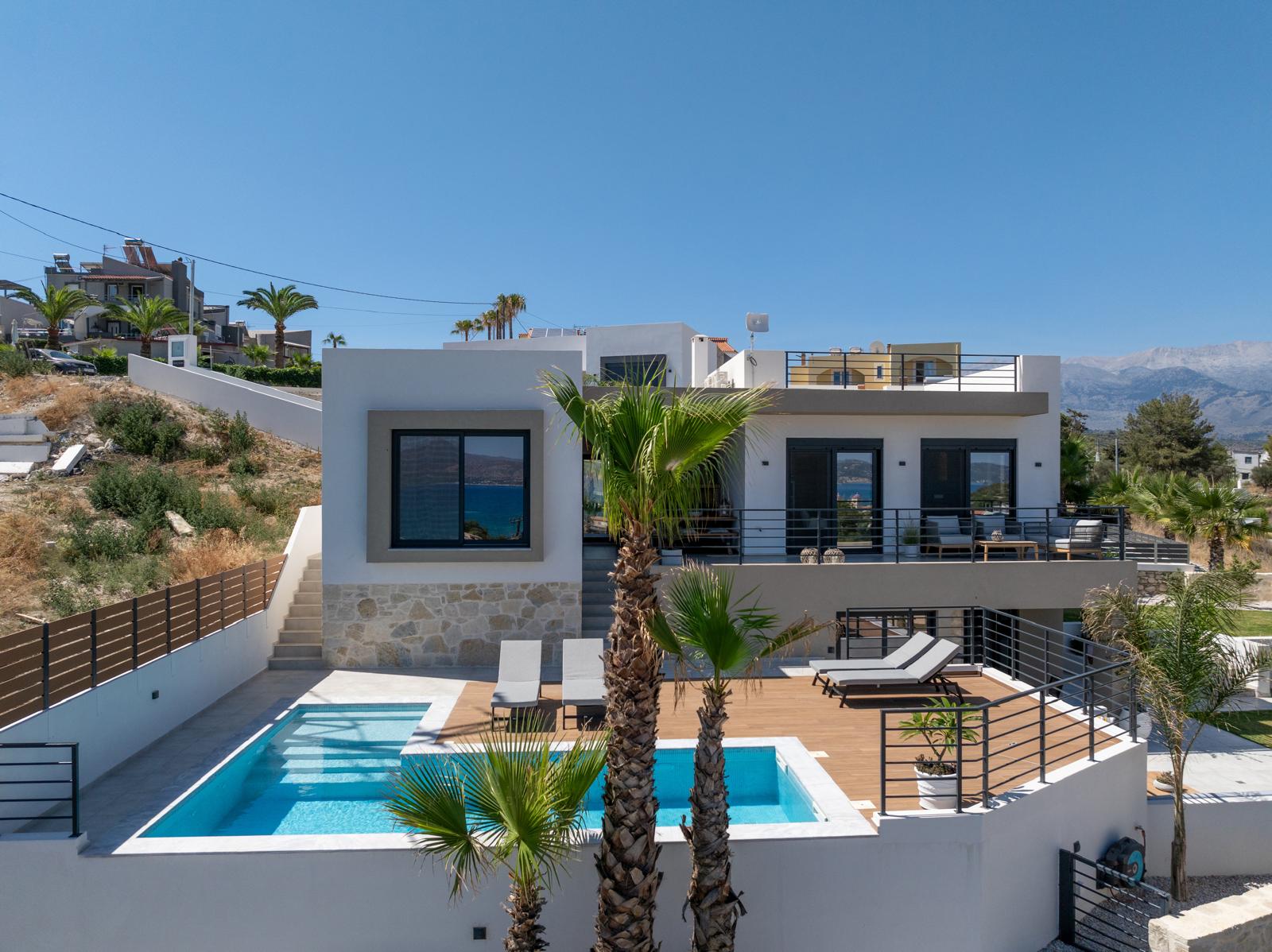
Today we live in our dream house on Crete built by Kreta Eiendom. Would you like to know what they can do for you? Contact them and let them know you're connecting with them through Living on Crete. They'll be happy to hear that.
Kreta Eiendom
Construction company

Our experience with
Land purchase on Crete
In August 2021 on the end of our holiday, we met with the contractor in Rethymnon.
We had seen an "off-plan" house on their website. This was a type of house they could build within our budget, but without providing the land.
As luck would have it, while we were there the architect showed us a piece of land on paper that was available in Kalyves.
Unfortunately, we couldn't see the land in person because we were flying back to the Netherlands the next day. We then arranged a video meeting with the architect so we could see our land and the view on a screen. That was the beginning of our adventure.
Transfer tax or not
If you buy land in Greece, you normally owe transfer tax to the Greek tax authorities. However, there are exceptions!
As a rule, you pay the transfer tax before you pay for the land and acquire ownership. Check with your lawyer or notary whether you qualify for an exemption from paying transfer tax. This could easily save you thousands of euros, just like it did for us.
We had paid the transfer tax, and then, through our own research, we discovered that we were exempt from paying it because we met the Greek criteria. Our Greek lawyer was quite reluctant at first (or maybe she didn't want to invest the time?), but we met the criteria set by the Greek government 100%. It took more than two and a half years before we received the transfer tax back from the Greek tax authorities.
More information and the exact criteria for the exemption can be found on the Greek government website.
Hire a Greek lawyer
Our tip: always hire a Greek lawyer before purchasing land. The lawyer will draw up a Power of Attorney. This is a written agreement that precisely describes the lawyer's duties and powers during the land purchase and, if applicable, during the house construction phase. Also read the information below about hiring a Greek lawyer.
Check whether the plot is buildable
Always consult a local topographer or engineer before purchasing a plot of land. Not every plot is "buildable," even if it's for sale.
Buildability depends on factors such as location, size (at least 4,000 m² outside urban areas), distance to roads and protected areas.
Making a down payment
Once you know where you want to live and a plot of land is available, you can "secure" it by making a down payment.
Don't make down payments directly to an owner or real estate agent without first having the land examined by a Greek lawyer.
Rolls, tasks and authorities
Hire a Greek lawyer
Buying land and building a house in Crete involves a lot of work. Because we initially lived in the Netherlands, it was important that someone here could legally and practically represent us during the land purchase. The lawyer from Kreta Eiendom helped us tremendously with this. She applied for an AFM (tax identification number) for us, opened a Greek bank account for us, and liaised with the authorities, the seller, the engineer, and the notary. The lawyer signed the land purchase contract on our behalf.
When we later bought a rental apartment, we were introduced to Argiro Doulgeraki, another Greek lawyer, through friends. We saw firsthand how professional, dedicated, and reliable she is. She responds quickly and genuinely thinks along with you, which is incredibly valuable when you're trying to find your way in a new country. We highly recommend her.
A lawyer is essential if you're planning to emigrate and build or buy a house in Greece. This is especially true if you're also planning to buy land, as we did.
The lawyer will investigate any legal flaws in the land and whether there are any illegalities or debts associated with it. We've learned in practice how important it is to have this properly arranged.
The lawyer will draw up a Power of Attorney so they can take action on your behalf, even if you're not actually on Crete. This written agreement outlines the lawyer's duties and responsibilities, as well as the associated costs.
Make clear agreements
Preferably choose a lawyer with experience working with international clients and real estate transactions.
Always request a written quote upfront, including translation costs, notary fees and transfer tax. Make sure you're well-informed about the overall process and how long it will take. Be aware that you might receive additional invoices from your lawyer afterward because certain items weren't included.
Legalization of documents
Your Greek lawyer will request many documents from you. Sometimes you need to have certain documents legalized with an apostille. This is a stamp or sticker placed on an official document by a competent authority (court) to confirm the authenticity of the signature.
Consult with your lawyer which documents require an apostille so you only need to visit the relevant authority once. Note: government-issued documents (e.g. birth certificates or marriage certificates) usually do not need to be legalized or translated separately.
For more information, check your government's website. More information about legalizing documents can be found here.
D.S. Law Office & Partners
Argiro Doulgeraki
Sokialidis Evangelos

from dream to reality
house design
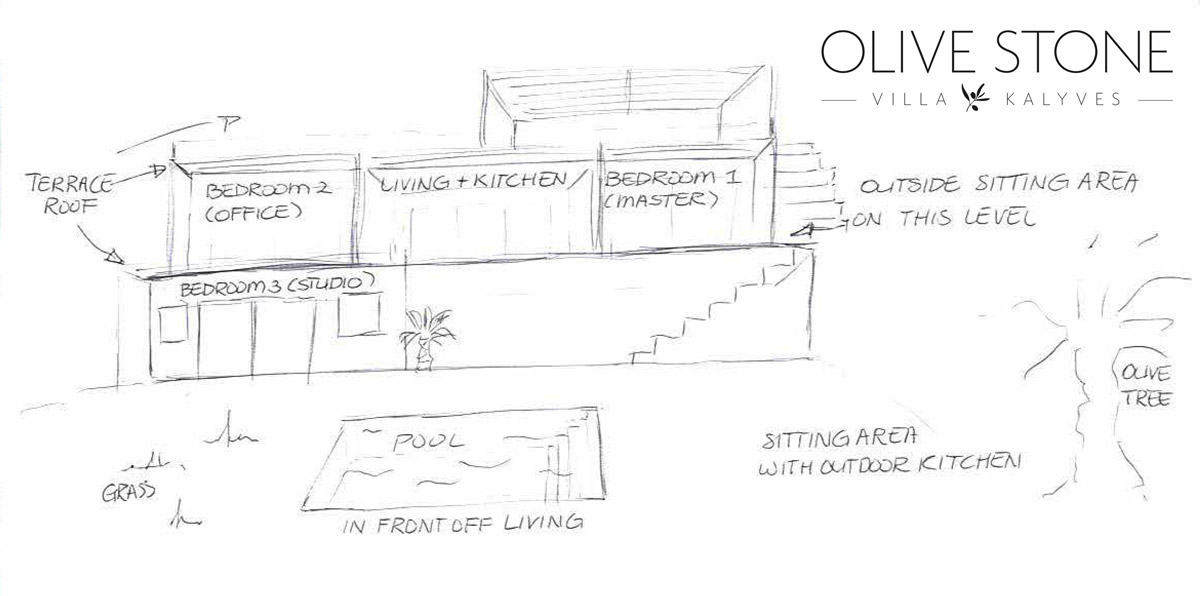
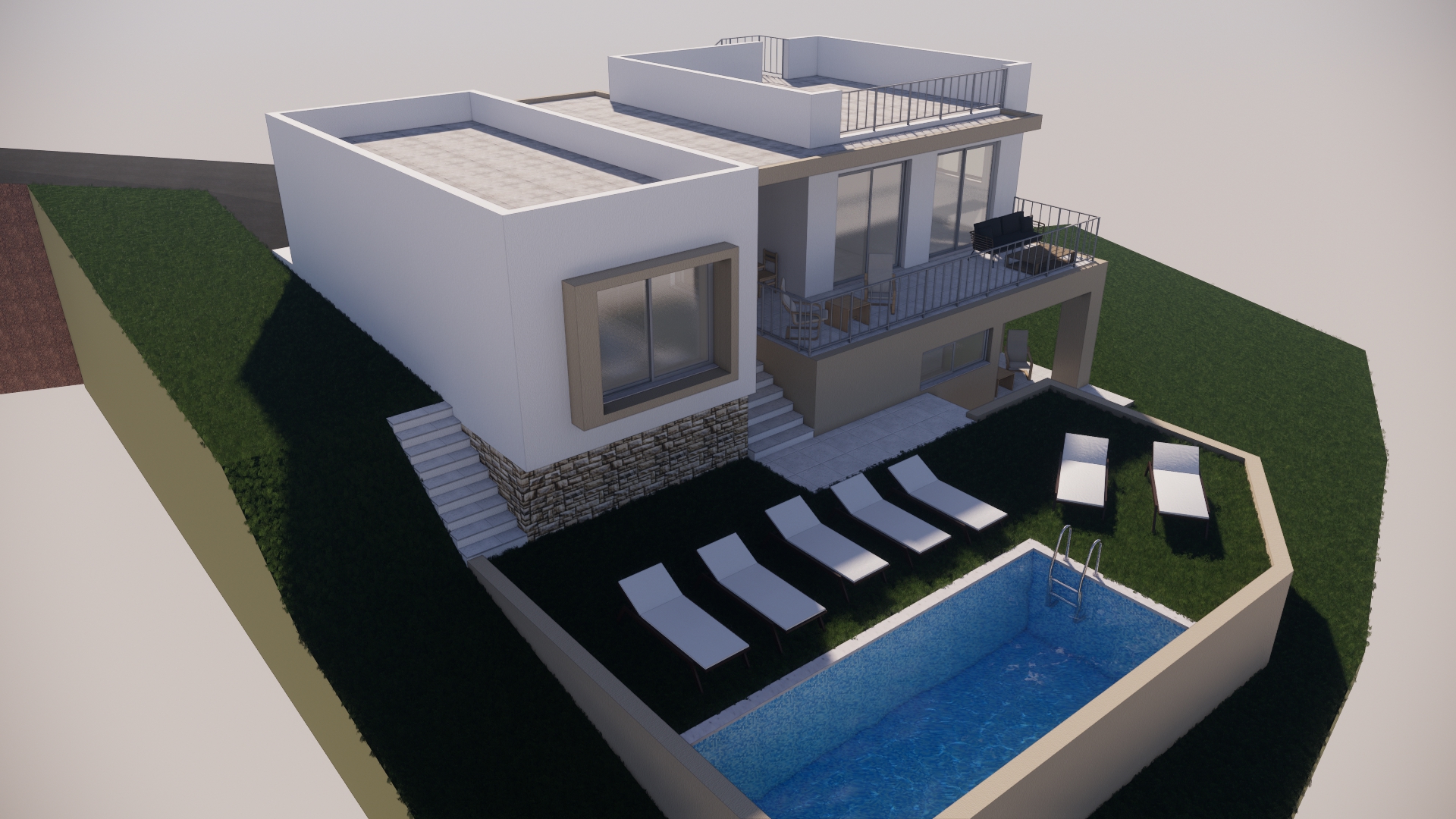
For the design of our house we submitted our own sketch, including a wish list and a mood board of materials and things we liked.
Based on this and our budget, the architect designed our house in 2D and 3D. That was really cool to see. Since we would be living there permanently (and it wasn't intended as a vacation home or rental), we spent a lot of time designing it exactly to our liking. We had quite a few changes made to the kitchen, bathrooms and the downstairs studio. Also we had the pool reshaped. All the changes ultimately took longer than anticipated, but it was worth it.
We designed our kitchen ourselves, including the layout and dimensions. The same goes for all the cabinets, the pool, bathroom furniture, the garden and the studio. Monique, as a graphic designer, provided all the 3D drawings to the architect and even modified his original CAD designs.
It can take a while...
Apply for building permit
After we agreed on the design of our house with the architect, he submitted the building permit application in April 2022.
Normally, this process takes six months to a year. The architect told us that our building permit could potentially be processed via a "shortened" procedure of two to three months, as our plot was part of a larger plot of land for which a building permit had already been applied for. Our building permit was similar to another one that had already been granted. Unfortunately, this turned out not to be the case in practice.
The building permit was finally granted in early November 2022. A total of almost seven months after the application. This was a significant milestone in realizing our dream.
bureaucracy in Greece
Greek bureaucracy means that permit applications, in particular, can take a very long time. There's little you can do about this.
The Greeks have been working on digitizing files and processes for quite some time, which still causes many delays. But pushing too hard doesn't work, in any case. Your application will simply end up at the bottom of the pile. Our advice is: stay polite and wait patiently.
Updating building permit
Please note that if you make "major" changes to the house's design after the building permit has already been submitted, you are obligated to officially submit the changes. This primarily concerns visible external changes, such as additional windows, doors, modifications to walls around the house, or the swimming pool, for example. We paid approximately €2,500 per submitted change request.
If you don't, you'll have a problem later on. Once construction is complete, the competent authority will conduct a final inspection. They will check whether the construction is exactly as per the submitted permit. Only if everything is in order, the building permit will be officially issued. Until this is the case, you won't be able to sign a "residential" (personal) contract for electricity, for example.
Our dream comes to live
Build house
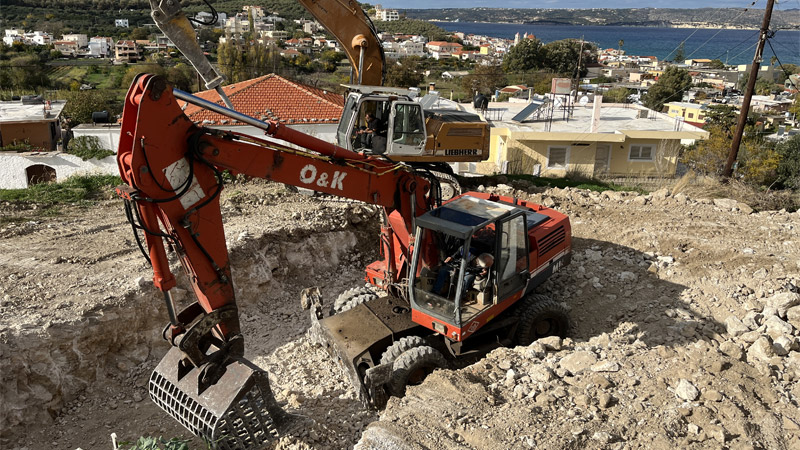
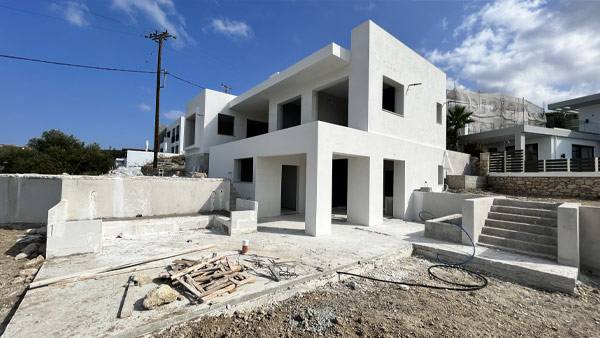
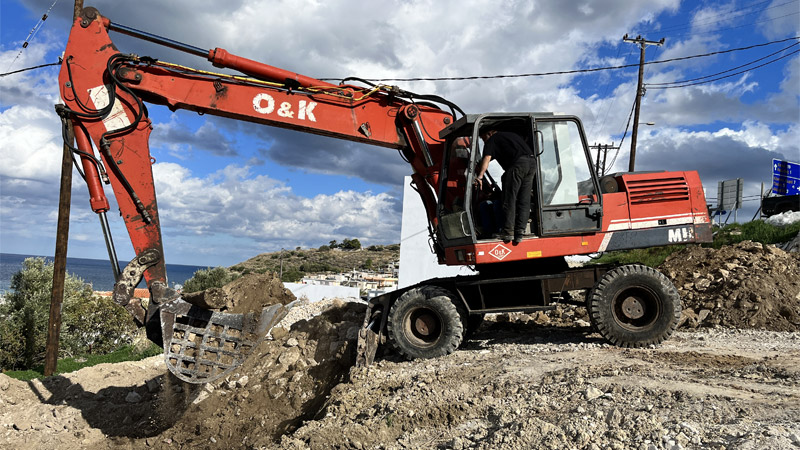
In early December 2022, the first excavators arrived at our property. Construction had now officially begun.
Since we were already living in Crete, we also visited the construction site several times a week. Sometimes we noticed things that weren't according to the plans. Fortunately, we were able to resolve these issues effectively with the contractor.
At the end of December 2023 we received the keys to our new house and the Minoan Logistics moving van arrived the same day with all our belongings.
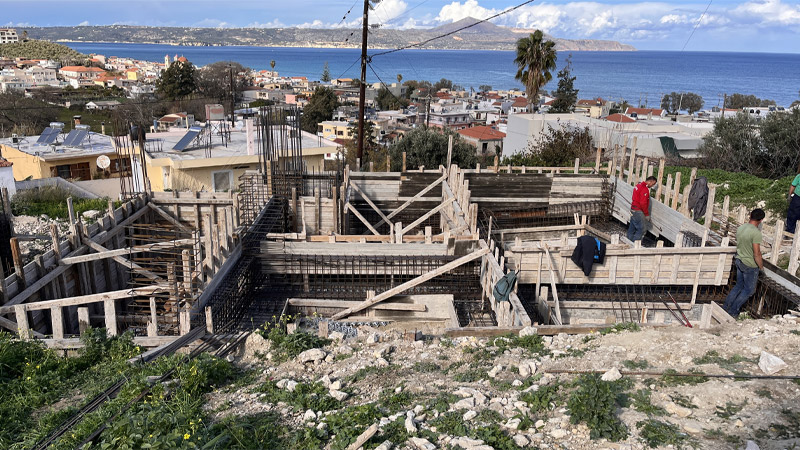
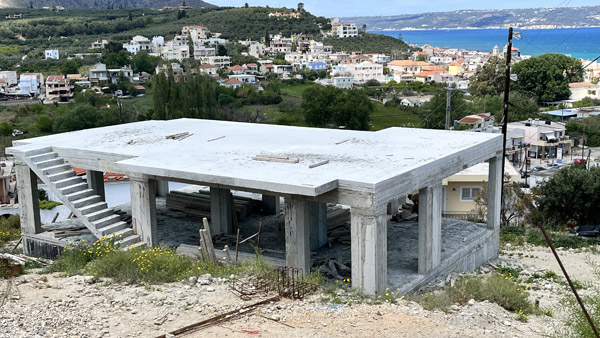
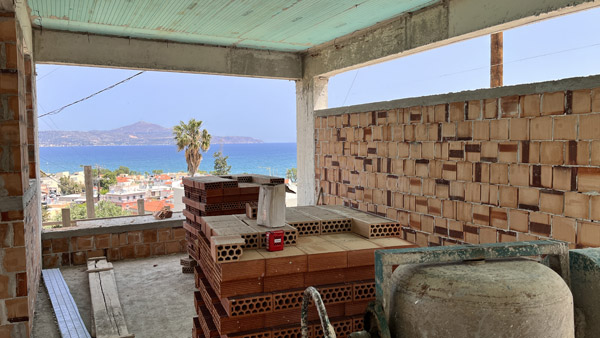
Our contractor updated us on progress of the build every two weeks with photos. The consultation with the contractor went smoothly, and when we were on-site, he always took the time to discuss everything with us.
Strict agreements versus flexibility
It is important to make concrete agreements with the contractor about the construction of the house.
Personally, we really appreciated that we didn't have a penalty clause regarding an exact completion date. This created room for us to make changes to the original design in consultation with the architect and contractor.